Quick answer: A technical SEO checklist for spoken queries is: one subject per URL, the answer in the first 60 words, valid schema that matches the page, mobile Core Web Vitals that pass field data, and internal links that use the next question as the anchor. Keyword density is not on the list.
Google's public systems (BERT, and later models such as MUM) match a question to a passage. If the title says one thing and the first screen says another, the system guesses. Guessing is how the wrong page gets read out loud.
Audit posts usually dump a 40-item crawl list. They skip the pass that matters once the crawl is clean: does each URL answer one spoken question. This checklist is that pass, in the order I would run it on a New Jersey service site.

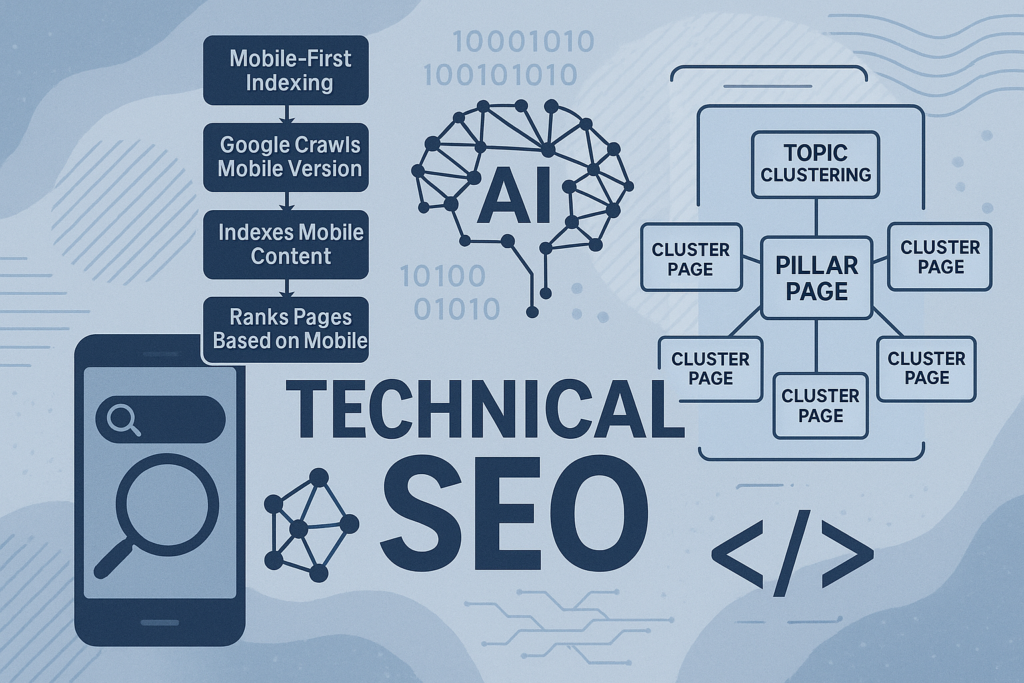
Index the mobile page, because that is the page
Google indexes the mobile version. If the mobile template hides the address, the hours, or half the copy, that is what gets judged. Check the phone rendering, not the desktop editor.
Spoken queries arrive on a phone. A layout shift that pushes the phone number below a banner costs the call even when you won the snippet.
Core Web Vitals, field data only
The three field metrics are Largest Contentful Paint, Interaction to Next Paint, and Cumulative Layout Shift. Fix the thing the field report fails:
- Oversized hero images and late fonts for LCP.
- Heavy menus and third-party chat for INP.
- Banners and late ads that move the button for CLS.
A perfect lab score that the field data does not show is not the task. Donna Bella's site work included tracking so the clinic could see which visits became form fills. Without that, a speed project has no business result.
Schema that matches the visible page
| Page | Type | Must match |
|---|---|---|
| Service or location | LocalBusiness or the specific subtype | Name, address, phone, hours on the page |
| Article or guide | BlogPosting | Headline equals the H1, author is a real person |
| Question block | FAQPage | The questions and answers are visible |
| Home | Organization and WebSite | The logo and the name you actually use |
Do not mark a page up as a medical clinic if it is a marketing site. Do not emit two competing Article nodes. Validate in Google's rich results test, then view source and confirm the headline string is the H1, not an old title.
One URL, one spoken question
Thin city pages that swap the town name fail this test in the first minute. If the advice does not change between Edison and Hoboken, you do not have two pages. You have a template.
Internal links should be the next question in ordinary words. "Click here" tells the reader and the crawler nothing. Five relevant links beat a block of twenty.
This is the technical half of semantic topic clusters. The writing half is topical authority.
Audit order
- Crawl: status codes, canonicals, index bloat, duplicate titles.
- Field Core Web Vitals on the templates, not on a single lab URL.
- Read the mobile first screen of each money page. Is the answer there?
- Compare schema headline, name, and hours to the visible page.
- Map internal links. Orphans and city-swap pages get merged or cut.
Checklist
- Mobile template shows address, hours, and the offer
- Field LCP, INP, and CLS checked on the real template
- Canonical points at the URL you want indexed
- Noindex on thank-you and utility URLs only
- Schema headline equals the H1
- FAQ schema only where the FAQ is visible
- City pages exist only where the service actually changes
A Saturday pass on a small site
Set a timer. On a typical New Jersey service site this is one afternoon, not a retainer's worth of tickets.
- Search Console, Pages, filter to "not indexed." Fix the ones that should be indexed: noindex left on a service page, a canonical pointing at the homepage, a redirect chain.
- Open the mobile URL of the money page. Confirm the address, hours, and phone are in the HTML, not only in an image.
- PageSpeed field data, or the Core Web Vitals report. Write down the one metric that fails. Ignore the rest until that one is green.
- View source and find the JSON-LD. The name in the schema should match the H1. If the schema says LocalBusiness and the page is a blog post, delete the block.
- Click every internal link in the first screen. Each anchor should be a question a person would say.
Write the five findings in a doc with the URL and the fix. That doc is the checklist. A 40-row crawl export with no owner is not.
If the failures are the kind that need a longer engagement, what a full engagement covers is the place to start, and the query analysis post is how you tell whether the fixes changed anything.
FAQ
Is technical SEO still mostly crawl errors?
Crawl errors still block indexing. After they are gone, the remaining technical work is speed, schema accuracy, and whether each URL has one subject.
Do I need FAQ schema on every page?
No. Only where the questions are on the page. Markup for text the user cannot see is a mismatch, and Google can ignore it.
What is a passing Core Web Vitals check?
The field report, not the lab screenshot. If the 75th percentile of real visits fails LCP, fix the hero. If the lab is red and the field is green, leave it.
How does this relate to voice search?
Voice assistants read a short passage. The technical job is making that passage the first thing on the mobile page, with schema that names the same business the profile names. The query side is covered in voice search local SEO.
If you have a crawl file and a field Core Web Vitals report, that is enough to start. Send both. We will mark what blocks indexing before anyone writes a new page.
